In this keynote address for the Annual Homer G. Phillips Public Health Lecture in 2024, WashU & Slavery Project director Geoff Ward connects the history and legacy of Homer G. Phillips Hospital to the earlier and unfinished work of Reconstruction in Civil War-era St. Louis, where WashU and others for a moment modeled a possible future of equal protection in American health care.
It is an honor to be invited to deliver the Annual Homer G. Phillips Public Health Lecture. I am not a public health or medical researcher and, as some like to say, I am apparently not even a “real doctor.” I am an historical sociologist with a specialization in the study of racialized social systems where access to social goods – rights, resources, respect, and so on – are allocated inequitably along socially constructed “racial” lines. In social ecological terms, this involves the study of unhealthy social bodies, their symptomology, and possibilities for healing. My practice has focused on the ways histories of racialized violence such as slavery and racial terror lynching have created specific wounded places, and systemic inequity manifest across cultural and institutional contexts. I have been increasingly interested in understanding how various approaches to confronting the past might create healthier communities organized to support collective well-being. This is one of the most important questions we face, in St. Louis and across the globe, because legacies of unresolved histories of systematic racialized violence – including colonialism and slavery – are among the world’s most pressing problems.
Healing Wounded Places
A large body of robust social science research illustrates that state and local histories of slavery and lynching help account for an array of subsequent patterns of conflict, violence, and inequality. These studies generally show that, net of other factors, racial terror lynching was more likely in U.S. counties with more pronounced histories of enslavement, and that state and local histories of slavery and lynching predict a vast and interactive array of contemporary attitudes, behaviors, and institutional outcomes related to crime and violence, justice systems, income, education, political polarization, health outcomes and more.
Research links county histories of lynching to contemporary violence including homicide rates and Black-victim homicide, in particular. In places where lynching demonstrated the absence of equal access to legal protections, degrading faith in the rule of law, Black community “self-help” orientations towards dispute resolution are more likely. These legacy effects - which have been described as “legal estrangement” – interact with other structural determinants to shape the lethality of conflict. These legacies combine with easy access to lethal weapons, for example, to increase the area likelihood of lethal interpersonal violence.
Infidelity to the rule of law combines with other cultural and institutional conditions to reproduce inequality in exposure to lethal violence and other outcomes. For example, unequal access to emergency medicine and compassionate care contributes to historically elevated homicide rates in African American communities. Examining data on women imprisoned for murder convictions in Alabama’s Tutwiler Prison from 1929 to 1985, researchers estimate that one-quarter of the Black women prisoners who were convicted of murder in Alabama in the period would not have been guilty of homicide “if their victims had received the same [emergency medical] care as the victims of their [white] counterparts.” Their analysis of national data from 1988 victims suggests a similar proportion of African American victim homicides may be attributable to racial disparities in medical care rather than crime.
Studies also show that area histories of slavery predict contemporary hate crime, and not only anti-Black hate crime but incidents targeting Jewish, Latino, and LGBT populations. Numerous studies demonstrate similar relationships between histories of slavery, lynching and contemporary criminal justice system outcomes, including racial disparities in arrest, lethal police violence, incarceration and capital punishment (see Ward 2025). Studies attribute these patterns to spatially concentrated cultural supports for racialized violence, including state violence, feeding racialized animus, appetites for punitive excesses, and relative disregard for African American’s and other minorities civil and human rights.
Legacies of slavery and other historical racial violence have also been documented in public health, including disparities in cardiovascular disease and life expectancy. A recent study found the proportion of the population enslaved in southern U.S. counties in 1860 is associated with shorter Black life expectancy and longer white life expectancy today, net of other factors related to contemporary population health. Research also finds that nationally widespread declines in heart disease are not as apparent among Black populations living in places distinguished by more pronounced histories of slavery. As in the case of crime and justice outcomes, researchers attribute this legacy of slavery in heart disease mortality and other adverse health outcomes to a complex mix of risk exposures and opportunity structures. These include medical estrangement of historically marginalized populations, where distrust of medical professionals and institutions stemming from histories of injustice suppresses utilization of health care services.
The U.S. is not alone in facing legacies of historical racialized violence. Growing comparative international research demonstrating similar legacy effects. Research in Germany found that spatial patterns of anti-Semitism in the medieval era reliably predict violence against Jews in the 1920s, votes for the Nazi Party, deportations after 1933, and attacks on synagogues. Another German study found that areas with memorials to Nazi atrocities in contemporary Berlin yielded less support for far-right political candidates, providing globally salient evidence that commemoration of past injustices can impact contemporary political culture and behavior.
This is a small fraction of the research evidence underlying my claim that addressing legacies of historical racial violence are among our most pressing societal problems, locally and globally. Histories of racialized violence degrade the normative foundations of communities, “put[ting] human relations on a lower plane,” with adverse implications for a host of subsequent cultural and institutional outcomes and creating the need for community healing and compensatory elevation of human and civil rights.
None of the contemporary legacies of slavery were inevitabilities, rather, they reflect past and present failures to sufficiently address cultural and institutional imprints of that atrocity, and to set and sustain a new path of national unity and economic and political inclusion. As I will elaborate further in a moment, the era of reconstruction coming out of the Civil War promised this societal reorganization, including here in St. Louis, but was violently opposed and soon abandoned in a compromise prioritizing white reconciliation, resulting in America’s apartheid era.
Still, there is evidence that legacies of racialized violence, and the threat of repetition, can be mitigated through contemporary interventions including the cultivation and preservation of “robust structural safeguards,” and through collective action that resists intergenerational transmission, which includes commemoration. Some African American communities have stronger, historically rooted structural buffers from legacies of slavery. Sociological research finds that enduring legacies of resilience and resistance including stronger “civil rights infrastructure, Black congregations, and Black political power” are spatially associated with the historical presence of free Black populations and contribute to relative protection from contemporary over-policing. It is likely that in St. Louis and many other cities these safeguards were insufficient to prevent Black community displacement through processes including urban renewal, which likely further diminished these protective factors, creating more exposure to discrimination in criminal justice, educational, employment, health, and other contexts. Yet these safeguards can be bolstered where needed, and preserved where they exist, to promote community resilience.
Research and policy should focus on further clarifying, evaluating and strengthening these mechanisms, with the aim of decoupling histories of racial violence and contemporary violence, conflict, and inequality, including health disparity, by strengthening the cultural and institutional foundations of community resilience and collective well-being. I hope this is an area our university, including our new school of public health, will develop strength and distinction in. That would be a fitting tribute to the early history of the institution, and appropriate compensatory measure given our role in the abandonment of reconstruction.
Memory Work around the WashU Medical Campus
Histories and legacies of racialized violence and prospects of mitigation provide context on the sociological importance of this occasion, the memorial Homer G. Phillips Public Health Lecture, as a practice of reparative memory work, or effort to build collective memory that helps create a more just future. We are awash in remembrance, memorials, historical markers, and so on. Every day is seemingly a day of remembrance of something. A few weeks ago, my kids informed my wife and I that it was International Video Games Day, which they should be able to celebrate – no honor – by playing video games on a school day. We believed them, or were impressed by their maneuvers in any case, and they celebrated advances in gaming.
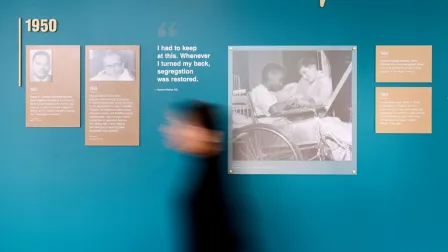
Many are skeptical of the substantive import of our many remembrance efforts, but this example from my kids illustrates that it is not inconsequential: remembrances can help reconfigure normative environments and opportunity structures. Researchers stress that memory work can create or reshape political pedagogies we encounter in public space, helping reorder social relations by elevating specific values and diminishing others in the public sphere. The recently installed desegregation exhibit and timeline in the BJC Institute for Health on WashU’s medical campus is another example of this normative intervention. The timeline bears witness to a history of injustice in the practice of medicine in St. Louis while committing to a just future. That recognition may help counter the estrangement of populations historically subject to this exclusion while also seeding deeper commitments to equity and inclusion among current and future professionals, and many others who shape health policies and practices through political behavior, civic engagement, philanthropy and more.
What I have been especially interested in understanding in current research and teaching is how anti-racist commemorative interventions like these might contribute to dismantling structural racism, especially by mitigating noted legacies of historical racial violence. We often think of injustice in only political-economic terms, and correspondingly think of remedy – of real, meaningful address – only in redistributive terms: the redistribution of social goods, such as rights, resources, and opportunity structures. Of course, all of these are crucial, but we also must attend to injustices in the cultural-valuational realm, the area of constructed meanings and shared truths, where problems like erasure, disrespect, and cultural domination operate. Political theorists stress that these representational injustices – the dynamics that desensitize us to some groups suffering, that normalize disassociation and create social distance – require another kind of redress, remedies of recognition, which involve paying respect, countering erasure and misrepresentation, and creating cultural change.
Commemorative efforts underway at WashU School of Medicine and BJC Hospital, and in communities and institutions across greater St. Louis, exemplify this work of recognition. Understandably, some are inclined to dismiss efforts like memorial lectures or public history installations as merely symbolic, as “performative” responses to pressing issues like inequality in access to health care, education, and economic opportunity. Of course, remembrances alone are not enough, but juxtapositions of symbolic and substantive intervention draw a false binary; recognition and redistribution can be mutually reinforcing. How will our society inspire and sustain a commitment to reparative redistribution when the population is mainly rehearsed in misunderstanding, avoiding, and misrepresenting the harm itself?
After the 1836 sadistic lynching of Francis McIntosh in what is now downtown St. Louis, a journalist recommended “lowering the veil of oblivion over the whole fatal affair,” hoping the city might be able to just ‘move on’ and not have to confront the fact that a crowd had just burned this nominally free Black man alive. Nearly a century later, W.E.B. Du Bois wrote about a series of anti-Black atrocities in the 1920s that, “It was so horrible a tale that we hastened to forget it before we really understood it.” We have seen this pattern of motivated ignorance generally obscure the history and legacy of slavery. Today, centuries on from these examples from McIntosh and Du Bois – many school boards and state legislatures are attempting to prohibit the teaching of difficult truths, requiring schools to hold down the veil of oblivion on matters of race and justice, so that American children might forget them before understanding them.
WashU & Reconstruction
With timelines, remembrances, and repair in mind, I want to turn to some of what we are learning through WashU & Slavery Project research about the development of systemic inequities in healthcare, including what I suspect are little known efforts to promote health and other equity in Civil War-era St. Louis. This early and too soon abandoned work of reconstruction was led by some of WashU’s founding leaders and should inform and inspire efforts to establish WashU and St. Louis as a global hub for transformative solutions to the deepest societal challenges.
WashU & Slavery is spread thinly across many open questions for research and interpretation, and we are learning about things in many ways, including through collaborations with students, faculty, staff and community partners. I recently began to focus more closely on Reconstruction-era St. Louis, in partnership with a retired lawyer and Clayton neighbor named Jim Singer who I met while advising community remembrance efforts in Creve Coeur. Jim has played an important role in that ongoing reckoning with racial residential segregation and related redevelopment of Dr. H. Phillip Venable Park, another anti-racist commemorative intervention in the region I imagine many of you are familiar with, given Dr. Venable’s ties to Homer G. Phillips Hospital and WashU School of Medicine. Jim asked me if community members can work with the WashU & Slavery Project and I of course said, yes! I have admired Jim's work on the Venable Park project but most importantly we want the WashU & Slavery Project to support our campuses and communities in engaging the history and legacy of slavery in St. Louis and charting a reparative way forward. Our collaboration is also a testament to the unique energy and opportunity we have in St. Louis.
We began by exchanging emails about what we’d learned so far about Reconstruction-era St. Louis, which grew into a shared google drive, where we are keeping notes and timelines documenting what we find. Jim initially thought there was no Reconstruction era in St. Louis, per se, since Missouri had not joined the Confederacy, and because he’d never heard of it. Yet the Freedmen's Bureau, the federal agency established in 1865 to manage relief, resettlement and other aspects of post-ward Reconstruction, did operate in Missouri, and early leaders of WashU played a central role in the development of relief efforts throughout the Mississippi River Valley and here in St. Louis, that were continued by the Freedmen’s Bureau.
At the outbreak of the Civil War an organization called the Western Sanitary Commission was created, led, and significantly underwritten by founding WashU figures, especially James Yeatman and William G. Elliot, to provide health care, housing and other support to people throughout the region who impacted and displaced by the war. Beneficiaries included refugees fleeing battlegrounds, white and Black, enslaved and free, both Union and Confederate soldiers, and apparently anyone who was able to reach the field hospitals and relief camps they created across the middle and lower portions of the Mississippi River Valley.
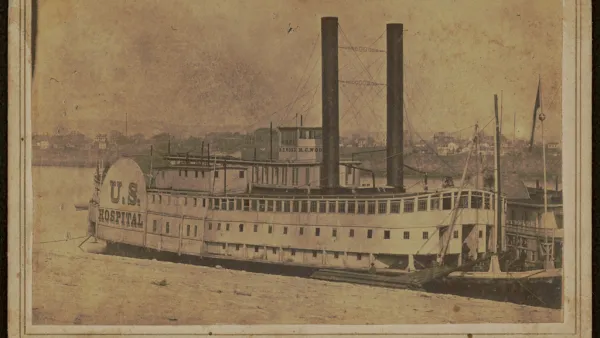
The commission and its base in St. Louis stemmed from early ravages of war in Missouri in the summer of 1861, which led to urgent preparations to provide care to people seeking treatment in St. Louis, and selection of St. Louis as Headquarters of the Military Department of the West. Sick and wounded civilians, soldiers and freedmen pouring into St. Louis overwhelmed its hospitals and mobilized civic leaders in their aid. The commander in St. Louis, General Fremont, formally established the Western Sanitary Commission and four of its five chosen commissioners had ties to WashU, then in only its eighth year. Yeatman led the commission as president and Eliot played a crucial role raising funds for the effort. The commission speedily assembled a medical facility and headquarters named City General Hospital, and established field hospitals and refugee camps throughout the river valley, including innovative railroad hospital cars and steamships converted to floating hospitals, such as the City of Louisiana steamer pictured above.
Particularly noteworthy about the work of the commission in relation to Homer G. Phillips and health equity is its effort on behalf of the freed men, women and children seeking refuge in St. Louis, and in cities captured by the Union army along or near the Mississippi River. Both Yeatman and Eliot had ties to the institution of slavery. St. Louis abolitionist Galusha Anderson describes James Yeatman as a “retired Tennessee planter” who had been an enslaver but divested after a business trip down the Mississippi River impressed upon him the “enormity of slavery,” leading him to manumit the people he enslaved, sell off his plantations, and resettle in St. Louis (see Anderson 1908). Eliot similarly had complicated ties to slavery, as WashU student researchers have documented. He clearly subscribed to white supremacist ideology, favoring abolition while opposing equal rights. Like many white abolitionists, Eliot hoped enslaved African Americans could be gradually freed then banished, such that white Americans would be freed of the presence of free African Americans, hoarding alone the spoils of settler colonialism and slavery. This agenda would eventually prevail in some ways, through post-Reconstruction disenfranchisement and segregation, but the Civil War and Reconstruction eras offer glimpses of a path of equity and inclusion our city and nation might have taken instead.
Reports from the period express surprise at the commission’s efforts to provide equally for the care of Black soldiers and civilians in need, and other white St. Louisans seemingly following this example for a time at least. The commission organized a successful fund-raising Mississippi Valley Sanitary Fair in 1864, which included a large department for freedmen due to the outpouring of local interest in their aid. Perhaps more out of urgency and expediency than principle, the commission’s aid was provided on a largely racially integrated basis, providing a glimpse of what might have come through sustained commitment to reconstruction. Yeatman in particular is said to have ensured that African Americans were able to access desperately needed medical care, as well as educational opportunity and fair compensation for their now free labor. Historical accounts credit Yeatman with organizing related National Freedmen Relief Associations across the northern states. There were also signs of white resistance, foreshadowing the era of redemption. A commission report noted the suffering of white refugees who refused medical treatment and housing because it was not administered on a Jim Crow basis, illustrating the work othering does to corrupt ideas and practices of public health, and exemplifying what Jonathan Metzl documents in his book, Dying of Whiteness (2020).
Black St. Louisans played important leadership roles in the history of reconstruction. Black soldiers stationed in St. Louis helped raise funds for and staff relief efforts. In 1862, Mary Todd Lincoln named St. Louisan Elizabeth Keckley presiding officer of the Contraband Relief Association of Washington, DC to support self-liberated refugees of slavery. Keckley lived in St. Louis from 1846 to 1860, where she was enslaved before buying her freedom using proceeds from her skilled dressmaking. President Lincoln was so impressed by the Western Sanitary Commission that he asked James Yeatman to lead the federal Freedmen's Bureau established after the Civil War and Emancipation. Yeatman is reported to have declined but he and Eliot alongside others in St. Louis - including the St. Louis Ladies Contraband Relief Society and the American Missionary Association - appear to have functioned as de facto federal Reconstruction operatives through advocacy, service, and investments in areas including health, education, and economic development.
These are important and inspiring stories about reparative public health praxis. Why don’t we know them, celebrate them, and embrace the challenge they pose to us? They are memories we need for the future most Americans want. One reason we don’t know them, I suspect, is because their politics of inclusion misalign with what became a dominant agenda of racial segregation, where ‘separate and unequal’ was sold as natural and inevitable, which is at odds with these real-world illustrations of the possibilities of an American future prioritizing racial equity. Yet it is not too late to draw inspiration from this historical moment, albeit a small window of time, when St. Louis community members and institutions helped to advance transformative racial justice not only in health, but housing, education, and employment. This is a commitment we can take up and carry forward, it has happened in St. Louis before.
We can also see in our university history a microcosm of the national abandonment of reconstruction. WashU took a decidedly anti-Black turn in the 1890s, after Eliot’s death. The 70-year-old Eliot seemed to warn of the coming redemption in his 25th Anniversary address in 1882, where he lamented that “shadows of civil war ha[d] not yet been fully lifted from the state, [and] a half century of chief dependence on slave-labor ha[d] left its mark.” In apparent reference to persistent inequality in educational opportunity, he cited progress in developing school systems essential to making St. Louis a center of education, “but not yet with the degree of liberality that the interests of education justly demand.” Eliot died in 1887, five years after this speech, and James “Old Sanitary” Yeatman followed in 1901. By that point WashU had firmly embraced the virulent anti-Blackness endemic by the start of the 20th century. Several African Americans had obtained advanced degrees from WashU before 1892. A policy adopted that year specifically prohibited African American enrollment. The move from downtown to the new hilltop (now Danforth) campus seemed to coincide with rebranding as an elite, historically white institution, which likely contributed to burying the story of WashU and Reconstruction.
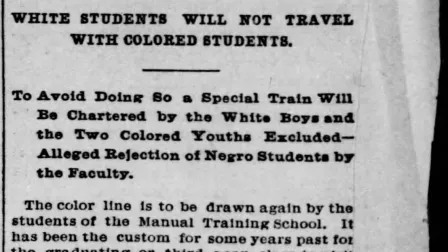
Our student project scholars are helping document this shift. A student researching the history of Black students at WashU found the 1890s newspaper accounts of white student’s complaining about the presence of Black classmates, echoing the earlier white aid refusers offended by equal opportunity, with racism is in this case corrupting the idea of high-quality education. This time institutional leaders accommodated white demand for Black exclusion. She also located a letter from 1906 where WashU’s Fourth Chancellor Winfield Chaplin misrepresented the recent history of the university to discourage a prospective Black graduate student. “I am obliged to state to you that negroes have never been admitted to Washington University,” he either lied or assumed, “and it would therefore be useless for you to try and make any arrangement to continue your studies here.” Chaplin replaced Eliot as chancellor in 1891, a year before the policy prohibiting Black student admission was introduced. He led the institution in a period of financial uncertainty, where he and board president Robert Brookings appear to have leveraged the market forces of racial capitalism to build the WashU brand and finances, which included the development of our segregated medical department.
This shift reflected and reinforced a national surge of white supremacist ideology and corresponding policies of American apartheid, bolstered by pseudo-scientific research characterizing race as a biological distinction, and whites as naturally intellectually, morally and physically superior. By the 1890s WashU scholars and leaders are clearly implicated in this epistemic violence, whose harms in the cultural valuational realm helped institutionalize racism. An 1898 meeting of the Academy of Science of St. Louis, presided over by a WashU alum who was then Dean of our School of Engineering and academy president, featured a pseudo-scientific presentation on “the Sociology of the Negro,” whose thesis was that Black people were savages, forever grateful for and dependent upon the civilizing influences of white men. Another project scholar is researching the work of WashU anthropology and anatomy professor Robert Terry, creator of a coveted collection of unethically acquired human remains comprised largely of poor Black St. Louisans, whose bodies were exploited in various efforts to measure and prove racial difference. WashU gained distinction from this extensive collection of “Negro Materials,” and the eugenicist Terry served as chair of the “Committee on the Negro” established by the National Research Council in 1926, further linking our institution and city to national and international networks of scientific racism that helped sustain systemic inequity. Student advocacy led the university to rename a lecture and professorship honoring Terry.
Our institution’s departure from the path of Reconstruction was further manifest in a 1942 remembrance effort, where WashU’s chancellor and the dean of the medical school participated in a ceremony at Bellefontaine Cemetery honoring Dr. Joseph Nash McDowell for his contributions to the early history of medicine in St. Louis, through the placement of a headstone. Their remarks ignored his virulent anti-Blackness, and unethical medical practices yet praised his service in the Civil War as a Confederate surgeon general, demonstrating how thoroughly white reconciliation and power consolidation had displaced the inspiring if fleeting transformative racial justice agenda of the reconstruction era.
Conclusion: Metabolizing the Past
In closing, I hope my remarks provide a fuller sense of the timeline of social closure, opportunity hoarding, and estrangement implicating our institution in systemic health and other inequity in St. Louis, historically and today, as well as some inspiration from a buried era of Reconstruction we can be proud of and draw inspiration from. I have shared research on legacies of slavery to underline the stakes of reconstruction, historically and today, and because too many of us want to forget slavery without understanding its enduring significance.
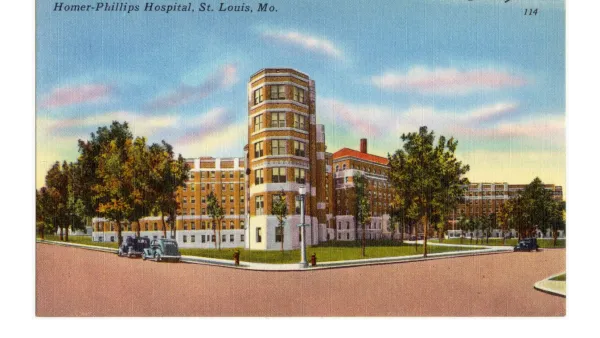
As Tessa Morris Suzuki writes in her book, The Past Within Us, “We live enmeshed in violent structures and webs of ideas that are the product of history, and though we are not responsible in the sense of having caused them, we are implicated in them, in the sense that they cause us.” The contested work of reconstruction never really ended in St. Louis or the United States, it continued over the past century against variable odds through interventions like Homer G. Phillips Hospital, the Civil Rights Movement, and the Movement for Black Lives. Its energy lives in this lecture series, in the desegregation timeline, and the WashU & Slavery Project, which have all uncovered more of the past that should inform and inspire our future.
I have argued and truly believe that St. Louis can transplant its status as America's “Broken Heart” by working to build what Dr. King called beloved community, in dialogue with efforts elsewhere in our region, nation and world. I believe St. Louis has a unique capacity to become America’s Beloved Heart, by virtue of its story, resources, and spirit, and that WashU can play an important role here by linking reckonings with legacies of colonialism and slavery to our ambitious mission and strategic plans. That may sound grandiose and naive, but it is already part of our institutional history and involves small acts like bearing witness to the history of medical segregation on the wall of a major hospital and working with a neighbor to uncover stories of Reconstruction era St. Louis.
Ultimately, I suspect that when communities develop healthier approaches to integrating or metabolizing difficult pasts. By facing difficult truths and using them to create shared understanding, and build relationships of trust, cooperation, and interdependence, we can transform these histories and their legacies of conflict, alienation, and inequality, into sources of community strength, mutual understanding, and collective well-being.